It was Wednesday, June 12th, 2024, just after 8 p.m. The meeting was wrapping up when he suddenly collapsed. I saw him fall against the table before hitting the floor. Immediately, those nearby rushed to his side, trying to help him stand, but he seemed unable to get up.
“Are you okay?” “Did you hit your leg?” people who were around him asked. He was conscious, but his lack of response made me realize something was seriously wrong.
We lifted him into a chair. His wife was frantic, shaking him and calling his name, but he remained unresponsive. I asked for a blood pressure monitor and a soda. The first machine gave an error, and I thought the machine was faulty. We had a second one on ground and used it. The machine started reading, reached over 240 mm Hg, and also gave an error that the blood pressure was out of range. I took a closer look at him and it was then I noticed he wasn’t moving his right hand and leg, only using his left to wipe his face and occasionally moving his left leg. I realized he was having a stroke.
We needed to get him to a hospital immediately. We were in Wuye District, Abuja, and two people suggested nearby hospitals in Wuye. We carried him to a car and headed to the first hospital, only to find it had closed down the previous year. The second hospital had also closed down.
The National Hospital Abuja was my next thought—it’s a tertiary center and should have the necessary diagnostic capabilities. Someone suggested the Federal Medical Center (FMC) in Jabi, but I thought it was too far. So, we headed to the National Hospital.
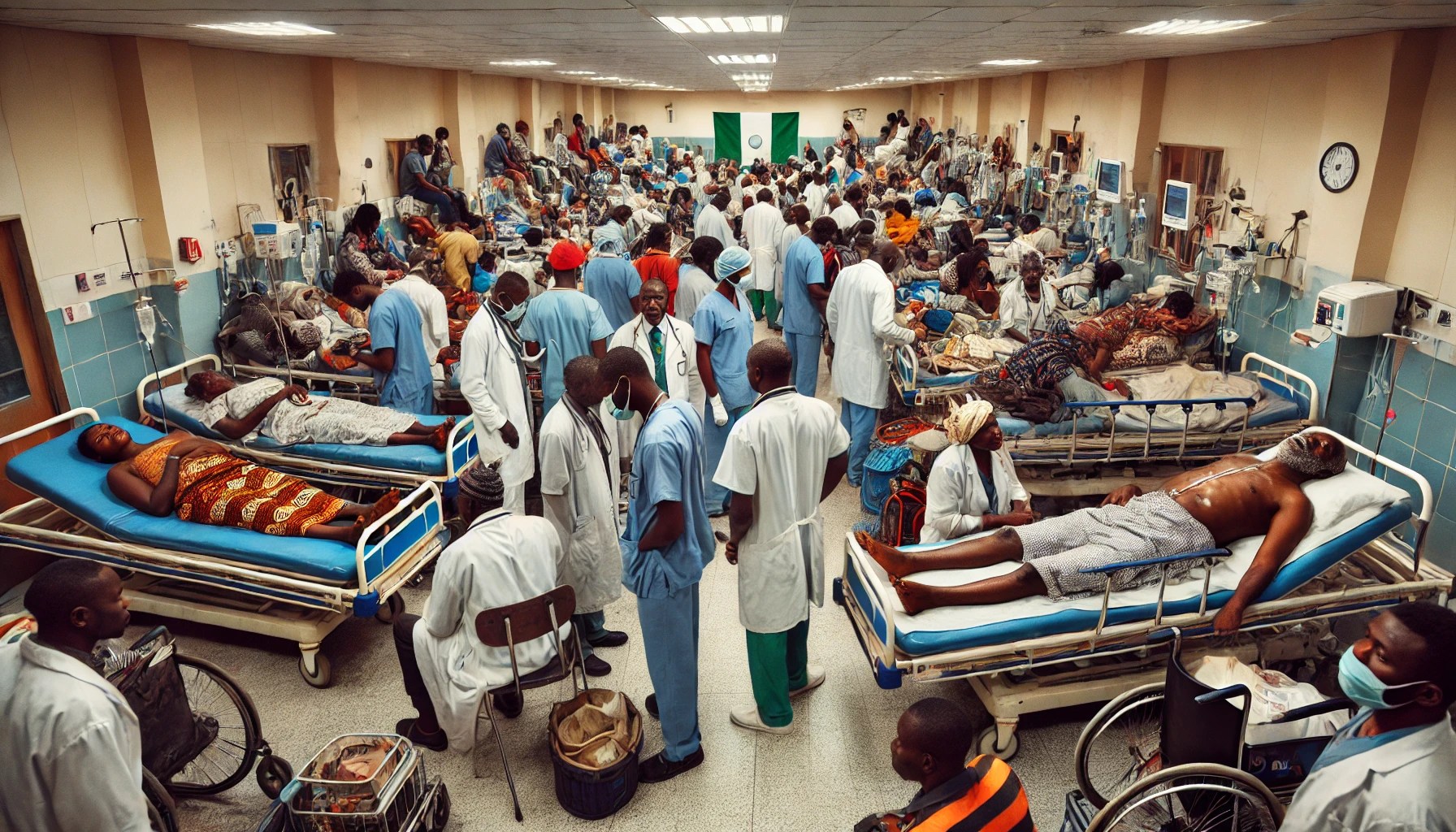
Upon arriving at the emergency room, I walked in and saw a young man casually sitting there. I explained that we had a potential stroke patient and needed a wheelchair. He said he had to inform a nurse first, who would then decide whether to bring the patient in. After ten minutes of waiting and no nurse, I approached the nursing station. A nurse in pink scrubs was giving directions to someone, and I introduced myself as a doctor, explaining the situation. She followed me to the car, asked what happened, and his wife explained that he had fallen.
Suddenly, the nurse started shouting, “This is trauma! This is trauma!” Trauma? How? How did you even arrive at that conclusion? I was stunned. Even if it were trauma, what next? Another nurse came out, and despite my explanations, the first nurse wouldn’t stop shouting. No one attended to the patient. I was disgusted. Another doctor who came along with us was furious. We decided to leave and try Wuse General Hospital.
At Wuse General Hospital, a calm young man explained that they weren’t taking patients due to emergency room renovations for an accreditation visit the next day. He suggested Garki Hospital instead. I called my boss, who confirmed Garki had the necessary facilities including a CT scan machine, so we headed there.
Garki Hospital’s emergency room was full, even with patients on gurneys in the corridors. A nurse explained they had no space but I should talk to the doctor. The doctor reiterated that they didn’t have the space to take him but suggested we move him to Alliance Hospital (a private hospital) nearby and transfer him back when stable. Without HMO cover, private care was out of reach, especially considering that recovery would take some time.
We considered the Defense Headquarters Medical Center and the DSS clinic in Lugbe, but each had its challenges. Finally, a crew member got a call from a doctor who suggested FMC Jabi. We had no other options.
We arrived at FMC Jabi around 10 p.m. The casualty officer saw him, and finally we were able to get him the care he needed. He was moved into the ER, we registered him, and the doctor ordered a CT scan and some blood work. When we went to pay for the scan, the cashier advised confirming the CT scan was working, as it had been out of order for about two weeks. The doctor mentioned that we had the option of using the services at Baze University or going to a private facility back in town. Thankfully, the radiology team confirmed that the scanner was working but required calibration, and that would take 30 minutes. Eventually, calibration was done and he went in for the scan. The scan confirmed the diagnosis. Treatment began.
Reflecting on this experience, several questions linger:
- Did we have to endure this ordeal for a time-sensitive emergency?
- What was wrong at the National Hospital? A lack of empathy, unwillingness to work, or poor training? An empty ER in a major hospital is alarming. Healthcare workers need to be trained properly. From the doctor to the attendant, the attitude of an ER worker is important. An ER is where people in sometimes critical conditions come to find help and hope. Having the right mix of properly trained staff in the ER helps to foster recovery and hope.
- Why are ERs in large hospitals so small and understaffed? This leads to stress, mistakes, and burnout among medical personnel. The size, positioning, and location of our ERs need to be carefully thought through especially for public hospitals. Having the right number of staff is also critical ensuring that emergency care is truly emergency care.
- Why is critical infrastructure in public hospitals so poorly maintained? Private facilities often have functioning equipment, while public ones do not. As a medical student, this was an issue. Now, 23 years after, it is still an issue. Why? Public hospitals need to be more intentional about maintaining their infrastructure.
- Who are our public health institutions really serving? What would your answer be?
Lastly, our hospitals are not conducive to patient recovery. The rooms, wards, and spaces are to dingy. In my opinion, low wattage energy-saving bulbs are not suitable for certain patient spaces that are crucial to recovery. Adequate lighting is important for staff tasks and is a mood enhancer for both staff and patients alike. How do you put a sick person in a drab and gloomy environment? From the design and placement of the windows to the positioning of the lighting points and bulbs, lighting is crucial to patient recovery. A 2015 meta-analysis by Mehrotra, Basukala, and Devarakonda, among many other scientific publications, highlights that proper lighting significantly impacts health and perception in hospital environments. Yet, many of our hospitals are drab and gloomy, which is not conducive to healing.
A shout out to Dr. Ladan, the young medical officer at FMC Jabi, who gave my friend the required attention and has now set him on the path to recovery.
How can and when shall we change this recurring old narrative?
Folks take better care of your health. You do not want to face this ordeal.





 DrMaestro's Blog
Leave a comment